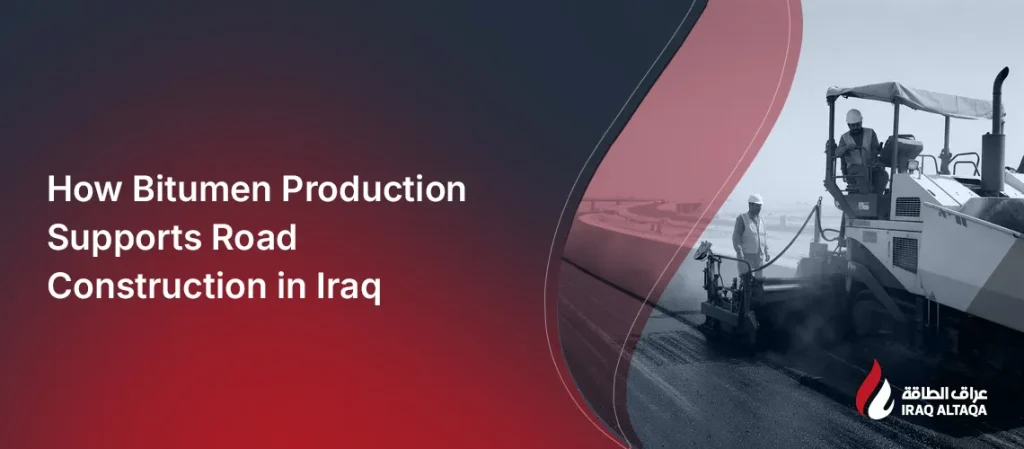
Road construction plays an important role in Iraq’s economic development. From highways connecting Baghdad and Basra to industrial roads serving manufacturing facilities, reliable transportation infrastructure depends on suitable construction materials. One of the most important materials used in asphalt pavement is bitumen.
Bitumen production in Iraq helps meet the demand for asphalt binders used in road construction, maintenance, and infrastructure development. As transportation networks expand and existing roads require rehabilitation, access to consistent bitumen supplies becomes increasingly important.
Understanding how bitumen is produced, tested, and supplied helps contractors and project managers make informed purchasing decisions.
What Is Bitumen Production?
Bitumen is a petroleum-derived material commonly used as a binder in asphalt mixtures. Its adhesive and waterproofing properties make it suitable for road construction and various industrial applications.
Bitumen production involves processing suitable petroleum feedstocks to obtain materials with specific physical and performance characteristics.
The resulting bitumen must meet the technical requirements of its intended application. These requirements may include consistency, temperature sensitivity, aging resistance, and other properties defined by applicable specifications.
Different construction projects require different bitumen grades. For example, conventional paving projects may specify penetration grade bitumen, while other projects may require Performance Grade Bitumen based on pavement temperature and traffic conditions.
Choosing the appropriate product begins with understanding the project specifications and the characteristics of the available materials.
Main Stages of Bitumen Manufacturing
Bitumen manufacturing involves several processing and quality-control stages. The exact production method depends on the feedstock, equipment, and required finished product.
1. Feedstock Processing
The production process begins with suitable petroleum-derived feedstocks.
Vacuum distillation is commonly used to separate heavier petroleum fractions under reduced pressure. This allows processing at lower temperatures than would otherwise be required at atmospheric pressure.
The resulting heavy fractions can serve as feedstocks for producing different bitumen grades, depending on their properties and subsequent processing.
2. Bitumen Grade Preparation
After feedstock processing, manufacturers prepare the material to meet the required product specifications.
Depending on the grade, production may involve controlled air blowing, blending, or modification using suitable additives.
For example, penetration grade bitumen is classified according to its penetration characteristics under specified testing conditions.
Performance Grade Bitumen, on the other hand, is classified according to its performance-related properties at designated high and low pavement temperatures.
These classifications help engineers identify materials that meet the requirements of particular road construction projects.
3. Quality Testing and Verification
Quality control is an essential part of bitumen production.
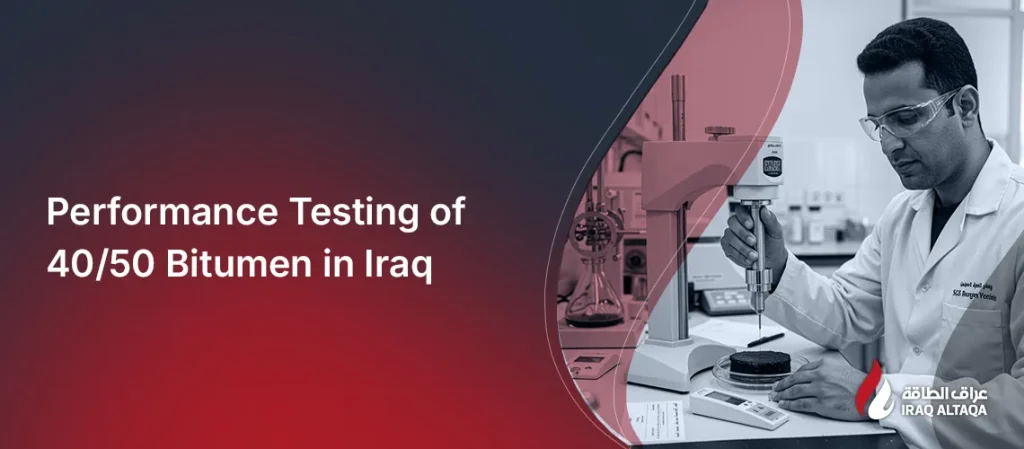
Manufacturers test finished products to verify that they meet applicable specifications. Depending on the product grade, testing may include:
- Penetration testing
- Softening point measurement
- Viscosity testing
- Flash point testing
- Ductility testing, where specified
- Performance-related binder testing
Testing results help determine whether a product meets the specified requirements before it is approved for delivery.
For contractors, reviewing technical data sheets and relevant test reports is an important part of the procurement process.
To understand these procedures in greater detail, read our guide to bitumen quality testing and standards in Iraq.
Why Local Bitumen Production Matters in Iraq
Iraq’s road network supports passenger transportation, commercial deliveries, agricultural activities, and industrial operations.
As a result, the availability of suitable road construction materials directly affects project planning and execution.
Local bitumen production can provide several practical advantages.
Supporting Road Construction Projects
Road construction contractors require reliable access to materials throughout the project schedule.
Unexpected supply interruptions can affect asphalt plant operations, paving activities, and construction timelines.
Working with an established bitumen producer in Iraq can help contractors coordinate material requirements, delivery schedules, and technical documentation.
Improving Supply Coordination
Bitumen must be transported and handled according to its product characteristics and applicable safety requirements.
Depending on the project, suppliers may offer different packaging and delivery arrangements.
Local production can simplify certain stages of supply coordination, particularly when materials are delivered to projects within Iraq.
However, delivery performance still depends on transportation arrangements, available inventory, production schedules, and site accessibility.
Supporting Infrastructure Development
Road infrastructure connects major commercial and industrial centers throughout Iraq.
For example, highways linking Baghdad with southern governorates support commercial transportation, while roads serving Basra’s industrial and logistics facilities accommodate substantial freight activity.
Projects in these environments require materials selected according to pavement design, traffic loading, and environmental conditions.
Reliable bitumen production contributes to the availability of materials needed for these applications.
Choosing the Right Bitumen for Road Construction
Not every road construction project requires the same bitumen grade.
Engineers and contractors must consider several factors before selecting a suitable binder.
Climate Conditions
Iraq experiences substantial seasonal and regional temperature differences.
High summer temperatures can increase the risk of pavement deformation, particularly where traffic loads are heavy or vehicles move slowly.
In northern regions, colder seasonal conditions may also influence binder selection.
These factors should be considered alongside the project’s pavement design and applicable technical standards.
Traffic Loading
Roads carrying heavy trucks generally experience different stresses from roads designed primarily for passenger vehicles.
Traffic volume, vehicle weight, loading duration, and operating speed can influence pavement performance.
For demanding applications, engineers may specify binders with particular performance characteristics.
Bitumen Grade Requirements
Common categories of paving bitumen include:
Penetration Grade Bitumen
Penetration grades, including 40/50 and 60/70, are classified according to penetration test results under standardized conditions.
Performance Grade Bitumen
Performance Grade Bitumen uses a temperature-based classification system to describe binder performance requirements.
Grades such as PG 70, PG 76, and PG 82 are associated with different high-temperature performance classifications.
The complete grade designation, including its low-temperature rating, must be considered when evaluating suitability.
Learn more about our Performance Grade Bitumen products and available specifications.
How Iraq Altaqa Supports Bitumen Supply
Iraq Altaqa operates a bitumen production facility near Karbala Refinery in Iraq.
The company’s product range includes conventional penetration grade bitumen and specialized grades designed to meet different technical requirements.
Our team works with customers to understand their product specifications, required quantities, packaging preferences, and delivery arrangements.
For contractors and procurement managers, these details are important because purchasing bitumen involves more than comparing prices.
The correct material must meet the project’s technical requirements and arrive in suitable condition for its intended use.
When evaluating a supplier, customers should confirm product availability, technical documentation, applicable quality standards, and delivery conditions before placing an order.
Conclusion
Bitumen production plays an important role in supporting road construction and infrastructure development across Iraq.
From feedstock processing and grade preparation to quality testing and delivery, each stage contributes to making suitable asphalt binders available for construction projects.
For contractors, selecting the right bitumen involves understanding the required grade, reviewing technical specifications, and coordinating with a supplier capable of meeting project requirements.
Looking for a bitumen producer or supplier in Iraq?
Contact Iraq Altaqa to discuss your project requirements, explore available bitumen grades, and request a quote.